Chairs
A chair reflects a company's desire to position itself sustainably at the heart of teaching and research, in the fields of expertise supported by the school's faculty.
Institut Français de la Mode offers several types of chairs, depending on the company's wishes:
- Research Chairs are dedicated to a specific research area. They provide a professor with the means to develop his or her research and allow the company to be associated with his publications.
- Teaching chairs reflect the company's desire to be visible to students and to take part in curriculum development.
- Finally, a company may decide to finance a research and teaching chair that combines the two objectives of the company, namely to be associated with the professor's research work and to participate in his or her teaching.
Kering and Institut Français de la Mode joined forces on 14 November 2019 to launch the IFM-Kering Sustainability Chair. The two fashion and luxury industry players share the common ambition of creating a high-level research and teaching center in the fashion industry, which integrates all aspects of sustainable development, including Corporate Social Responsibility (CSR).
The chair is under the direction of Mrs. Andrée-Anne Lemieux, PhD in industrial engineering and professor in charge of all initiatives related to sustainable development at Institut Français de la Mode.
The chair has two main objectives:
1. To promote research and teaching on sustainable fashion (ready-to-wear, shoes, leather goods and other accessories) for environmental, social and societal aspects, which implies :
- understanding the major ecological issues of our century, such as climate change and biodiversity loss, and acting to reduce the impact generated by the fashion sector
- studying and developing economic models for sustainable, circular fashion that respect the environment and people
- to study and propose ways of controlling the supply chain processes and the adequacy of the global value and production chain, at all its levels, to the ecological and social challenges;
- identify innovations concerning materials, manufacturing processes, traceability, logistics, transport and the end-of-life of a (fashion) product;
- to propose appropriate modes of communication at physical and digital points of sale in order to inform consumers so that they can exercise their own responsibility.
2. Take into account the "ecology of creation" from the beginning of the creation process. Given the central place that the designer - and his creative teams - occupy within a company, it is crucial to take into account the issues of sustainable development from the beginning of the creation process - this is what we call "the ecology of creation". This covers :
- identifying ways for creative teams to develop an ecological culture
- proposing models (criteria, operating methods, etc.) for new sustainable creative offers with strong appeal and analyzing examples of sustainable designs (new materials, slow fashion, etc.);
- the construction of a language (and a storytelling for designers) that facilitates communication between the designers and the other stakeholders of the Houses;
- measuring the environmental impact of creative projects: sourcing, transparency and traceability of materials, production processes, packaging, reuse and recycling of waste, etc;
- the development of tools and dashboards to help creative teams take ownership of environmental and social issues.
The work of the Chair will enable the development of teaching in various formats on the themes listed above in initial and higher education, from vocational to doctoral level. The research work will include the supervision of doctoral students on university theses, contributions to scientific publications and participation in conferences related to the Chair's programme and issues.
Dr Andrée-Anne Lemieux, Directrice de la Chaire
- Email:
- aalemieux@ifmparis.fr

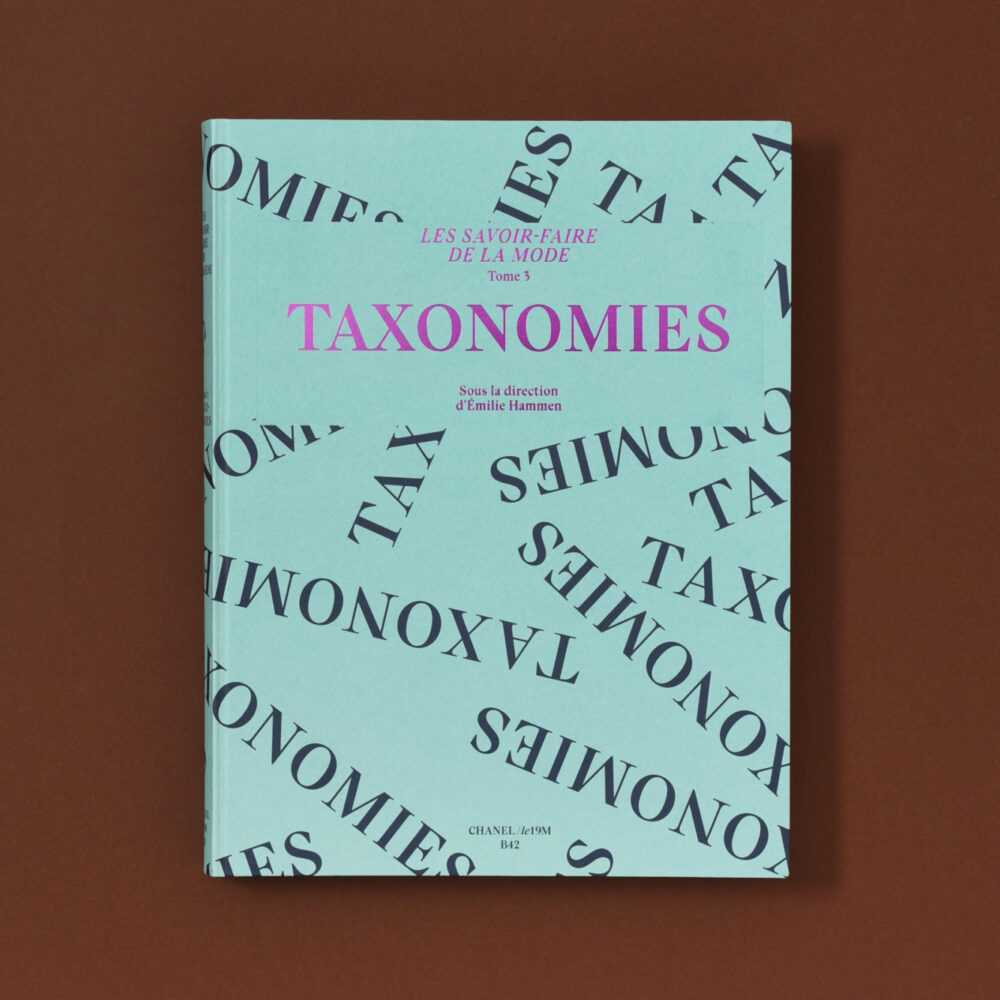
The CHANEL and le19M Chair in Fashion Savoir-Faire pursues three objectives:
- carry out research to provide a documented and multidimensional approach to the relationships between industry, society and the Fashion Métiers d’art
- establish an analysis of the links between savoir-faire, creation and innovation
- set up a pedagogical component to give a new dimension to the transmission of Métiers d’art knowledge to IFM students and other audiences.
All this work helps develop academic content, in particular the creation of a specific course, along with the integration of new content from the research work into existing courses.
The CHANEL and le19M Chair in Fashion Savoir-Faire is directed by Professor Émilie Hammen, who has a PhD in Art History (Université Paris 1 Panthéon - Sorbonne) and a background in design, both in applied arts at the ESAA Duperré and in fashion design at IFM. A teacher and exhibition curator, her publications focus on the history of fashion, its historiography and the links between fashion and the avant-garde.
Dr Emilie Hammen, Directrice de la Chaire
- Email:
- ehammen@ifmparis.fr